
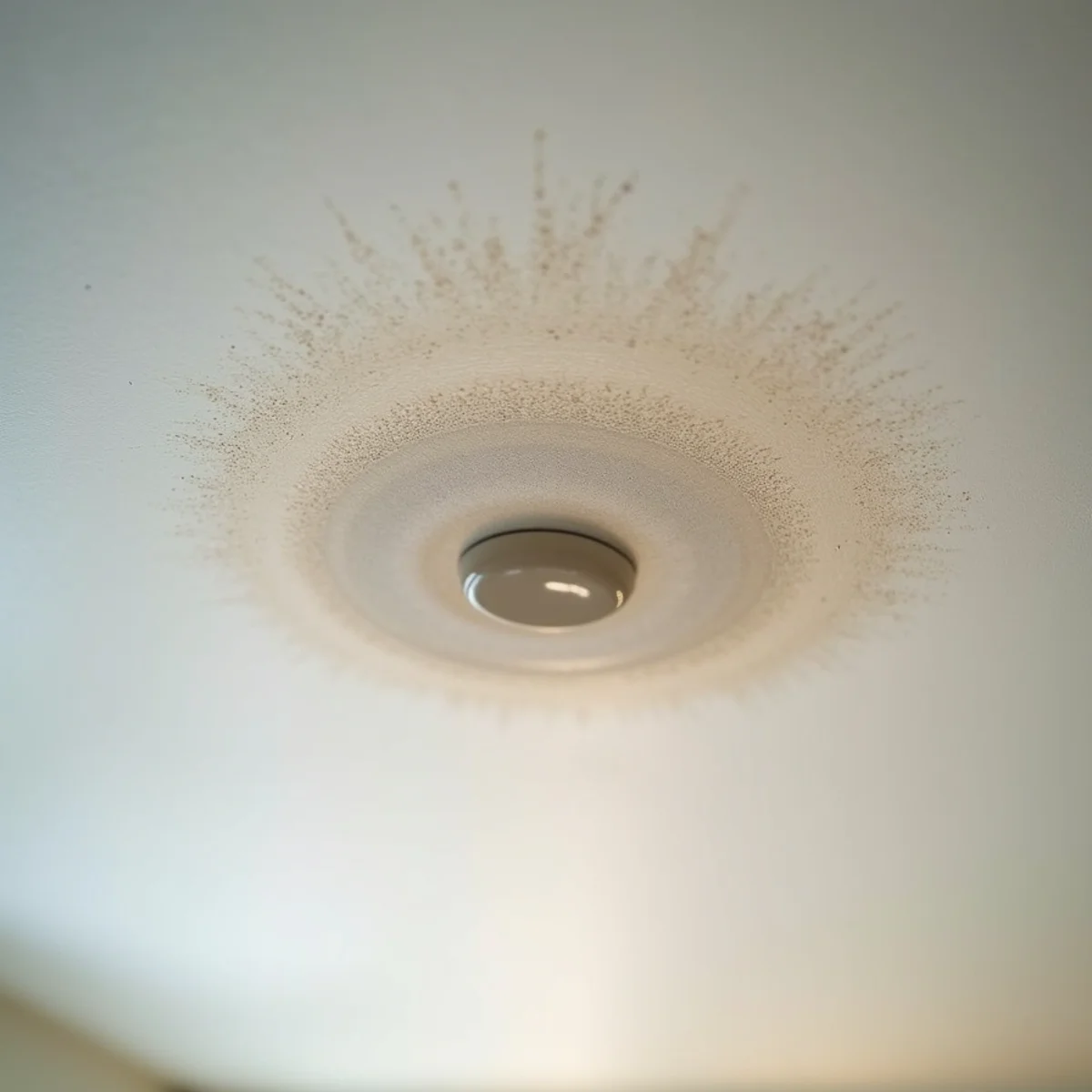
Direct Answer: Why Attic AC Units Leak Through Ceiling Drywall
Water dripping through ceiling drywall beneath an attic air conditioner is almost always caused by an algae-clogged primary condensate drain line that causes condensation to overflow the internal evaporator drain pan. If the secondary galvanized emergency pan is rusted, missing, or lacks an active safety float switch, overflowing water leaks directly through the attic floorboards and ruins your ceiling sheetrock.
In extreme Southeast Texas heat, an air conditioner produces between 15 and 25 gallons of water every 24 hours. Shutting the system off immediately at the thermostat is the essential first step to prevent total ceiling collapse.
How Texas Summer Humidity Creates 20+ Gallons of Condensation Daily

In Humble, Kingwood, and Atascocita, summer relative humidity outdoors routinely exceeds 80%. When your air conditioner operates, warm, humid indoor air is drawn across an aluminum evaporator coil chilled to 45°F. Moisture in the air condenses on the cold metal fins, exactly like ice droplets forming on a glass of sweet tea on a hot porch.
On an average 95°F summer afternoon, a standard 4-ton residential system extracts up to 25 gallons of liquid moisture every day. Under normal conditions, this water collects in an internal plastic drain pan and drains by gravity through a 3/4-inch PVC pipe out of the home.
The Anatomy of a Clogged Drain Line: Algae Sludge, P-Traps, and 140°F Attic Heat
Attic temperatures in Northeast Harris County regularly soar to 135°F to 140°F between June and September. This hot, dark environment creates an ideal biological incubator for algae, bacteria, and airborne fungal spores pulled in through return air leaks.
As water trickles through the primary PVC drain line, biological colonies form a thick, gelatinous white-and-brown sludge. Over months of heavy summer cooling, this sludge settles into the low dip of the P-trap, completely damming the pipe. With nowhere to go, water backs up inside the evaporator coil cabinet and spills over.
Emergency Damage Control Protocol: What Homeowners Must Do Immediately
If you discover water stains, bubbling paint, or dripping water on your ceiling, execute these five steps immediately:
- •1. Switch Thermostat to 'OFF': Shutting down cooling stops active condensation immediately while keeping the blower from vibrating water into ductwork.
- •2. Place Catch Basins & Towels: Position buckets directly beneath drips to protect hardwood floors, carpets, and furniture.
- •3. Relieve Trapped Water Carefully: If sheetrock is sagging in a giant water blister, place a large trash can underneath and pierce the center with a small screwdriver to release trapped water before the ceiling drywall collapses.
- •4. Inspect the Attic Secondary Drain Pan: Check if the emergency galvanized pan beneath the air handler is filled with standing water.
- •5. Call for Emergency Vacuum Clearing: Contact Hooten Air Pros at (321) 478-0693 for 24/7 emergency nitrogen blow-out and wet-vac drain line clearing.
The 3-Layer Defense Against Future Ceiling Leaks: Float Switches, Secondary Lines, and EZ-Traps
Modern plumbing and mechanical codes in Texas require robust failsafes to protect living spaces from attic water damage. First, every system should have a magnetic safety float switch installed on the secondary drain port of the coil or inside the emergency drain pan. If water rises 1/4 inch, the switch instantly cuts 24V power to the outdoor condenser, shutting off the system before a single drop hits drywall.
Second, an independent secondary drain line should terminate over a prominent window or patio where homeowners will immediately notice dripping. Finally, installing a clear, removable EZ-Trap with cleanout brushes allows fast visual inspection and seasonal vinegar treatments.
Have an Immediate Heating or AC Problem in Humble?
Capacitors, motors, coils, and drain lines serviced 24/7. Call (321) 478-0693.
Related Local Services & Coverage Areas
Questions Homeowners Ask About This Topic
Clear, straightforward answers about HVAC service, repairs, and pricing in Humble, TX.
Not Urgent? Send a Request
Schedule non-emergency repairs, seasonal tune-ups, or request an in-home replacement estimate.