
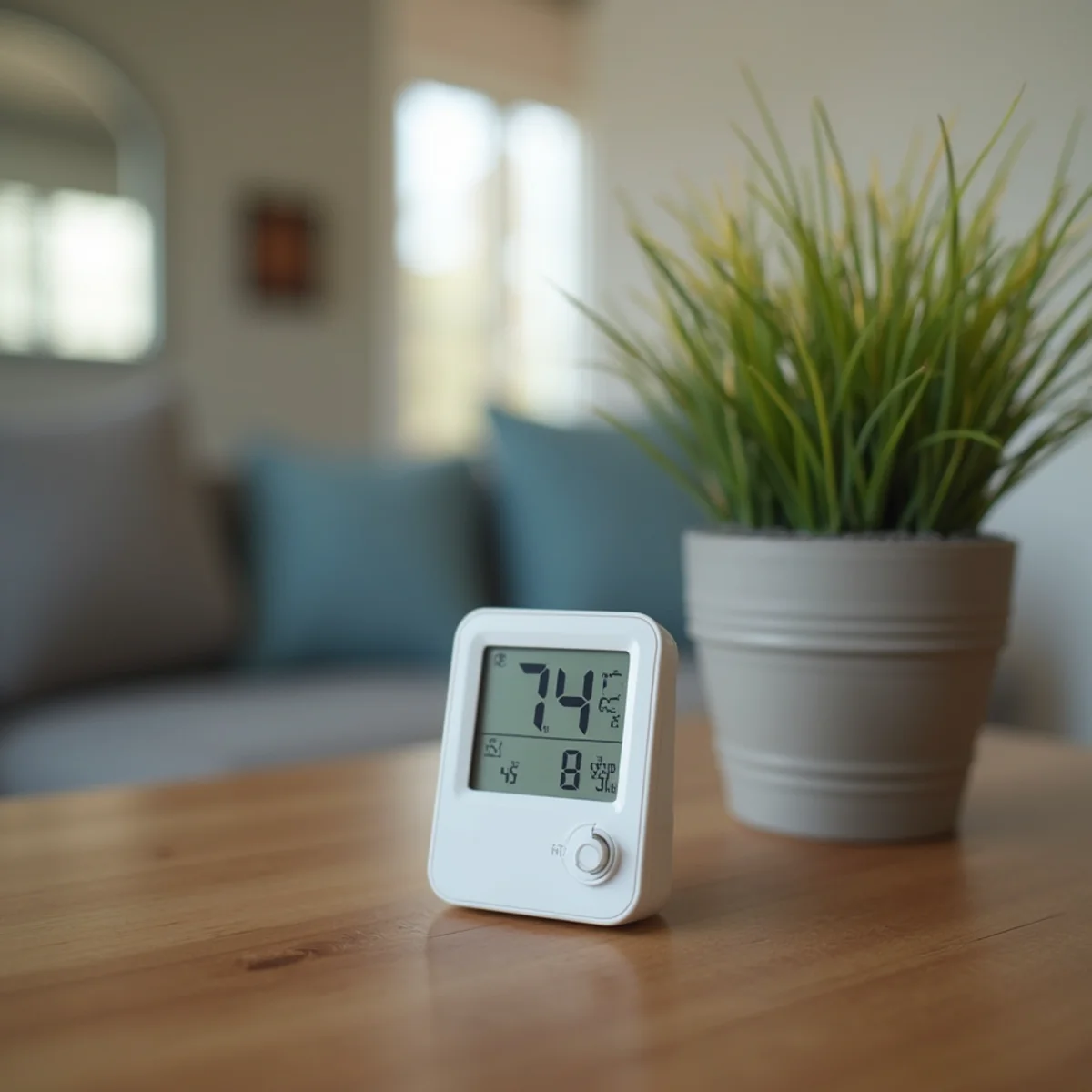
Direct Answer: Why Your Texas Home Feels Sticky With the AC Running
When indoor air feels muggy, sticky, and clammy even though your thermostat displays a cool 72°F or 74°F, your air conditioning system is failing to remove latent heat (airborne moisture). In Southeast Texas, this problem is almost always caused by an oversized AC system that short-cycles, torn attic return ductwork pulling in humid 140°F attic air, or leaving the thermostat fan switch set to 'ON' instead of 'AUTO.'
In a properly functioning HVAC system, indoor relative humidity should remain between 45% and 50%. Relative humidity exceeding 55% creates a swampy indoor environment, breeds dust mites, and fosters mold colonization on ceiling drywall.
Sensible Heat vs Latent Heat: The Thermodynamic Science of Dehumidification

To understand high indoor humidity, homeowners must understand the two distinct types of heat an air conditioner removes:
Sensible Heat: The temperature of the air as measured by a thermometer. Lowering sensible heat makes air feel cooler to the touch.
Latent Heat: The thermal energy stored within airborne moisture and humidity. Lowering latent heat condenses water vapor into liquid water, wringing moisture from the air.
In the humid Gulf Coast climate, latent heat accounts for nearly 40% of your total cooling load. For an evaporator coil to effectively condense moisture, it must run continuous cooling cycles lasting 15 to 25 minutes. During these longer runs, moisture gathers on cold aluminum coil fins and drains away by gravity.
The Oversizing Trap: Why Short Cycles Kill Humidity Control
The most common engineering defect in Houston-area homes is an oversized air conditioning unit. Contractors frequently install a 5-ton system where a properly calculated Manual J load requires only 3.5 tons.
Because the oversized unit has excessive cooling capacity, it drops the room temperature rapidly in 7 to 8 minutes and shuts off. While the air temperature drops, the system shuts down before the coil can condense and drain airborne water. The result is a cold, clammy house where sheets feel damp, hardwood floors feel sticky, and family members constantly lower the thermostat to 68°F trying to get comfortable.
Attic Ductwork Infiltration: How Negative Return Leaks Pump Gallons of Moisture Indoors
Over 90% of Houston residential ductwork runs through unconditioned attic spaces where summer humidity reaches 80% to 90%. If the return air plenum or flex duct connections have cracks, loose tape, or disconnected collars, the blower fan acts like a giant vacuum, sucking superheated, humid attic air directly into your home.
This constant influx of attic moisture overwhelms the evaporator coil. Sealing duct connections with mastic paste and insulating metal plenums eliminates this uncontrolled moisture infiltration.
Engineered Solutions: Lowering Blower CFM, Smart Humidistats, and Whole-Home Dehumidifiers
To permanently solve high indoor humidity, technicians implement three proven mechanical adjustments:
- •1. Dial In Blower Airflow (CFM): Reducing blower speed from 400 CFM per ton down to 350 CFM per ton increases refrigerant dwell time across the coil, dropping coil temperatures and boosting moisture extraction by up to 25%.
- •2. Keep Thermostat Fan on 'AUTO': Never run the fan continuously on 'ON' in Texas. When the compressor shuts off, running the fan blows warm air across the wet evaporator coil, evaporating gallons of collected water right back into your living rooms.
- •3. Install a Dedicated Whole-Home Dehumidifier: Installing a whole-home dehumidifier (70 to 100 pints/day) directly into attic ductwork allows you to maintain a crisp 45% relative humidity even on mild, rainy 75°F days when the AC compressor does not run.
Have an Immediate Heating or AC Problem in Humble?
Capacitors, motors, coils, and drain lines serviced 24/7. Call (321) 478-0693.
Related Local Services & Coverage Areas
Questions Homeowners Ask About This Topic
Clear, straightforward answers about HVAC service, repairs, and pricing in Humble, TX.
Not Urgent? Send a Request
Schedule non-emergency repairs, seasonal tune-ups, or request an in-home replacement estimate.